

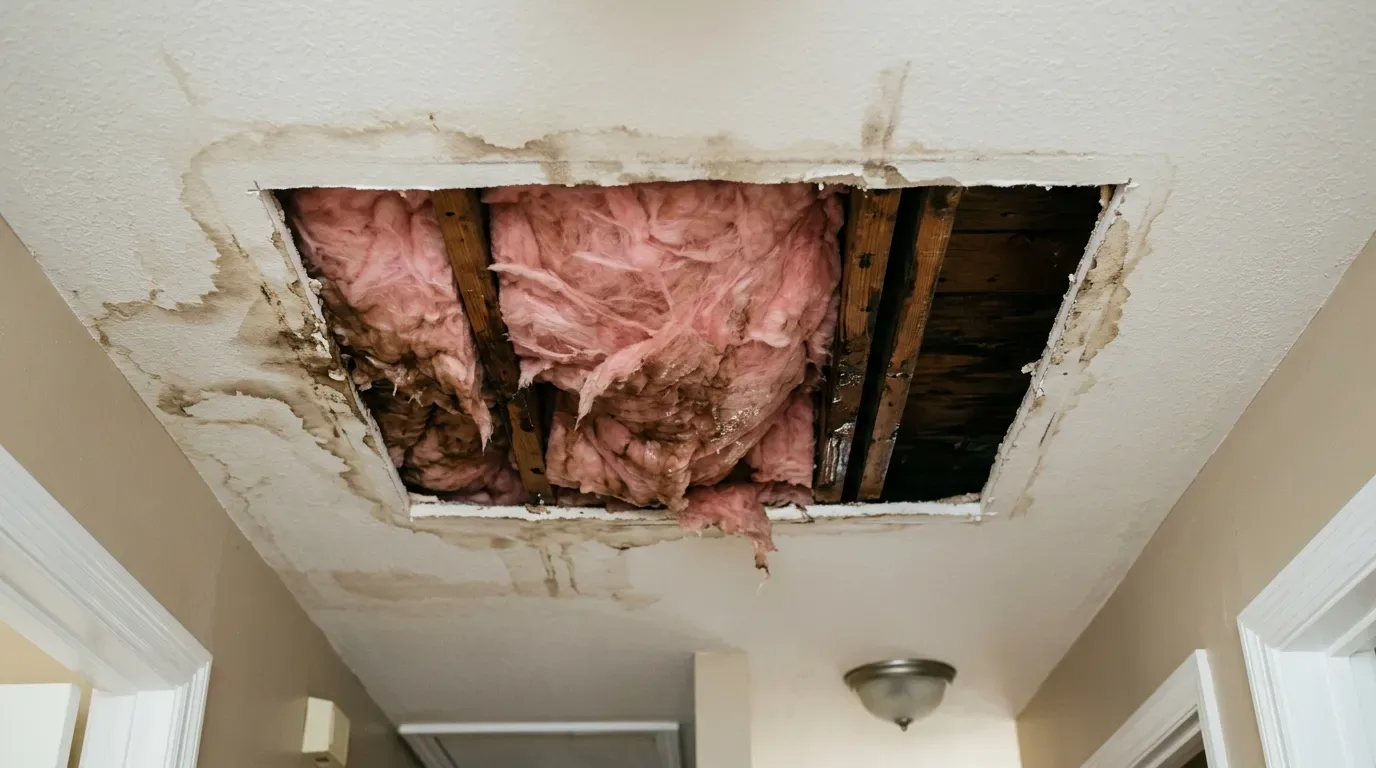
Insulation is there to add a layer with low heat conductivity. It is laid on floors, in walls and on the roof, so the house holds cool air in summer and stays comfortable in winter. Fiberglass batts and blown-in loose fill are the usual choices. All of these materials do their job only while they are dry.
A roof or plumbing leak is stress for any homeowner. If fiberglass, cellulose or foam got wet, the insulating properties drop sharply, and your expectations of the house go down with them. There are ways today to save the assembly, but it is important not to make mistakes that cost more than the insulation itself.
The main problem in this case is not just getting the water out. It is the chance of mold, which harms health and breaks down the structural members. Below is how to act when you find wet insulation in the ceiling.
Is Wet Insulation in the Ceiling Dangerous?
What happens when fiberglass soaks up moisture?
- It stops holding heat. Heat conductivity goes up, which means the rooms get colder.
- Humidity in the house rises. This leads to fungus and mold, which affect the health of the people living there. Wood framing starts to rot and deteriorate, metal parts rust.
Before running for a hair dryer, it helps to understand the physics. Wet insulation loses its properties. Even moderate moisture noticeably raises the heat conductivity of fiberglass.
Important: damp insulation becomes a breeding ground for fungus and bacteria. Even after drying, spores can stay in the structure of the material and cause allergic reactions in the people who live there.
The problem with wet insulation should be dealt with right away. The sooner it is done, the fewer problems there will be.
How Insulation in the Ceiling Gets Wet
The fibers of the insulation absorb moisture very readily, and it evaporates from the material poorly. Fiberglass dries only with good ventilation, and that ventilation has to be kept up for days. Creating such conditions is difficult.
In a finished house, insulation over a ceiling usually gets wet in one of these ways:
- A roof leak. Rain gets in at flashing, vents or damaged roofing and soaks the insulation below.
- A plumbing leak above. A supply or drain line in an upstairs bathroom, or a water heater in the attic.
- The air conditioner. In many Southern California homes the AC unit sits in the attic, and a clogged condensate line overflows its pan into the insulation.
- A bathroom fan that vents into the attic. Warm, wet air condenses in the insulation instead of going outside.
Types of Insulation and How Each One Dries
Not every insulation can be dried the same way. How much you end up spending on materials and installation depends on the material.
- Fiberglass batts. The most common in ceilings here; lightly damp batts can sometimes be dried in place, but soaked batts sag, mat down and are replaced.
- Blown-in fiberglass. Loose fill over the ceiling; wet areas clump and are usually vacuumed out and replaced.
- Blown-in cellulose. Paper fiber treated with a fire retardant; it soaks up water, packs down and grows mold, so wet cellulose is almost always removed.
- Mineral wool (rock wool) batts. Less common here; they are dried or replaced the same way as fiberglass.
Can insulation be dried fast with a heat gun? Not in a ceiling cavity: foam and paper facings can catch fire. For fiberglass, absolutely not. The heat gun will burn out the binder, and the wool will fall apart at the slightest touch.
Can Wet Insulation Dry Out?
First you need to determine how wet it is. If the material is soaked through, it is better to replace it. If there is an attic above, the wet insulation can usually be reached from there; otherwise the ceiling is opened from below. A dehumidifier then does most of the drying. It removes the excess moisture without taking down the finishes: the moisture is pulled out of the material and taken out of the room.
How long does wet insulation take to dry? It depends on how wet it is, the temperature, the humidity and the airflow. If the assembly is ventilated, the process speeds up.
Drying the Ceiling Cavity
If water reached light fixtures or wiring, turn off the power to that area at the breaker first, and keep people away from a sagging ceiling. If you noticed the leak in time and the amount of water is small, try to bring the indoor climate back with ventilation. This is the safest method for the structure. When airflow is not enough, a restoration crew adds dehumidifiers and, where needed, controlled heat. Here you have to be very careful not to damage the materials.
Strong Air Movement
- Cross-draft. Open all windows and doors.
- Air movers. Run industrial axial fans so they push air through the vent chase or just around the room. It is important to create not only air movement, but a difference in temperature and humidity.
- Temperature difference. If it is 41°F outside and 68°F inside, the process goes faster.
Dehumidifiers
Modern climate units (dehumidifiers) can bring humidity down to 30-40%. This is an effective method if the wet insulation is inside the house - in a wood-frame building or in the attic, when there is no access from outside. How the pros choose these machines is covered in our guide to choosing dehumidifiers for structural drying.
Infrared Heaters
Infrared rays heat solid objects, not the air. This makes it possible to warm the insulation itself quickly. The downside is a high risk of overheating combustible materials. This is equipment for a restoration crew, not for a homeowner.
Cellulose insulation is dried by natural means only. It contains fire retardants, and when heated it can catch fire or change its structure. Do not point a heater or a heat gun at wet cellulose.
How to Tell the Insulation Is Dry
Drying "by eye" is risky. You will spend extra money on electricity, and the assembly will stay damp.
- Visual check. With proper ventilation, there should be no drops of condensate on the surface.
- Touch. Wearing gloves, take a small piece of the wool (if you can reach it) or feel the surface through the insulation. If it feels cool or damp, it is still wet.
- Instrument. A moisture meter. The reading is taken through a hole drilled for the purpose, or from the inside at window or door openings.
Use a moisture meter for an accurate reading. Compare it with the normal level for the material. If it stays high, get ready to tear it out and replace it.
When Wet Insulation Needs to Be Replaced
To avoid these problems, check the condition of the insulation regularly. Watch for signs such as streaks or drops on the walls of a finished attic, cracks in the roof, roofing parts that do not sit tight, or sagging of the roof.
If fiberglass batts are already wet, they should either be taken out and dried, or replaced with new ones. But wet insulation must not be left between the rafters or joists, because mold can form on the wood.
Inside a ceiling, the longer and the more completely the material was soaked, the more likely it has to come out. If the area under the ceiling is furnished, the contents can be moved out first - see how our pack-out services work.
Wet Insulation Smell
Remember, wet roof or ceiling insulation is a serious problem that cannot be solved by hoping the material will dry by itself. Wet fiberglass batts lose their ability to hold heat and become a source of unpleasant odors, mold and bacteria. On top of that, moisture speeds up the decay of wood rafters and the corrosion of metal parts of the structure. The end result can be a major roof repair.
Does insulation need to be treated with an antimicrobial after drying? If there was no mold, drying is enough. If fungus has already appeared, special biocides are needed, but chemicals often do not reach deep into the fibers. When growth has started, read about mold remediation for water-damaged homes. General guidance on drying out a house and on indoor air after water damage is collected in the EPA's flood cleanup and indoor air quality resources.
Bottom Line
Wet insulation in the ceiling can be dealt with, but it takes time and discipline. Do not try to save the assembly "here and now" while ignoring drying times and temperatures. Remember that the price of a mistake is mold inside the walls, which then takes years to fight.
If the leak came from a pipe or the roof, start with our water damage restoration services. You can also learn more about our restoration team, read what Alpine homeowners say in reviews, browse more water damage articles on our blog, or go back to the Alpine restoration home page.