

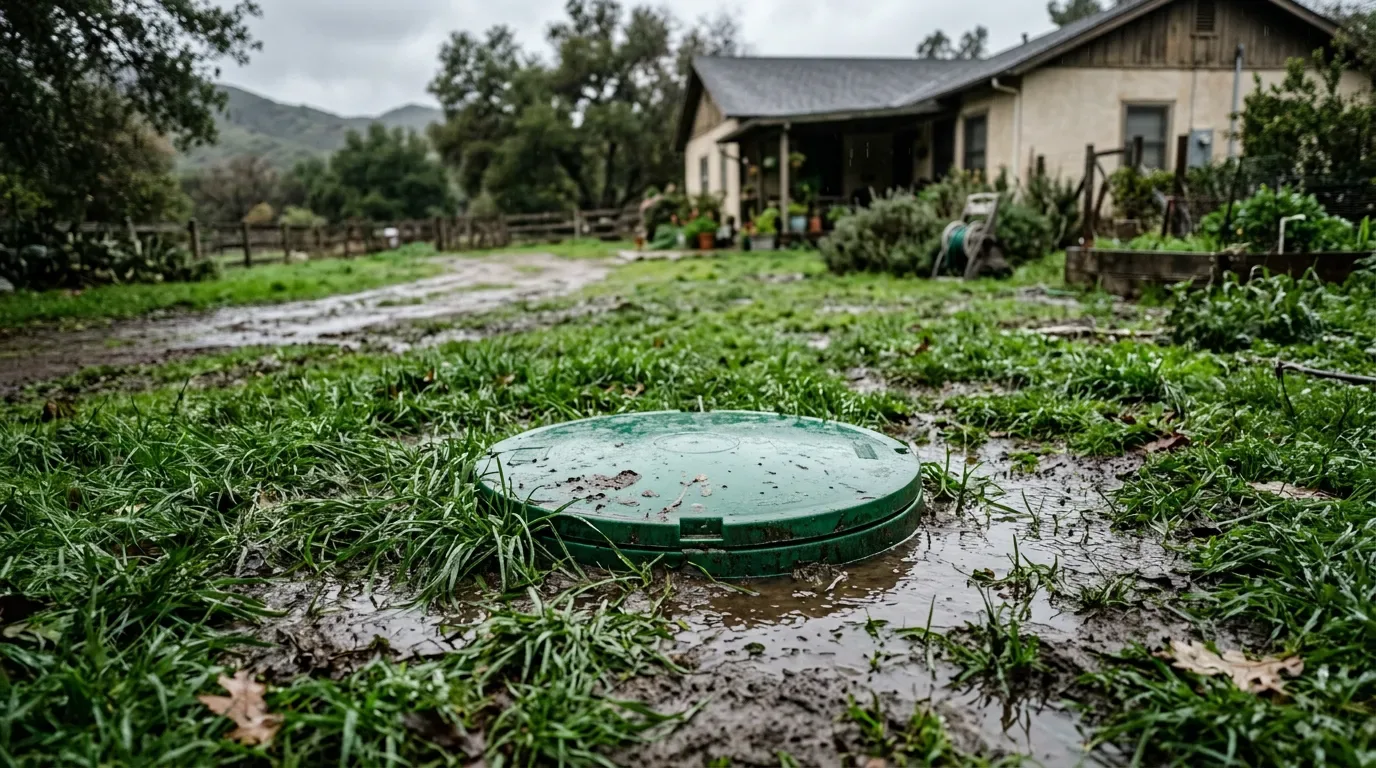
After heavy rain a septic system can suddenly drop out of its normal mode: water seeps out around the lid, the ground around the access covers is soggy, drains in the house have gone slower, and sometimes a smell shows up. The first thought is that the septic system is broken. But after a downpour the cause is often not inside the tank but outside it: rainwater got in through the lid, groundwater came up, or the area around the tank turned into a small bowl.
It is better to sort this out calmly. Pumping, bacteria and taking equipment apart help only when the cause is understood. If the tank is filling with outside water, it will raise the level again after the next rain. And if a septic backup in the house has already started, the problem is no longer only the tank. It is the floors, walls and belongings that the sewage touched.
What counts as a septic backup after rain
There is always water in a septic tank. A normal working level is not an emergency. The problem begins when the level is noticeably higher than usual, water comes up to the riser, wastewater leaves the house poorly or liquid comes out through the access cover.
Septic backup signs
- Water at the lid: water seeps out around the cover;
- Gurgling: after a flush you hear gurgling in the house;
- Slow drains: several fixtures drain slowly at the same time;
- A wet area: it stays wet by the access cover even after the rain has stopped, or the drain field is soggy;
- A level that rose on its own: the level went up although almost no water was used;
- Septic backup smell: a sharp sewage odor appeared.
If the high level appeared right after a downpour, and in dry weather the system worked normally, you first need to check for inflow of outside water.
A quick check in 10 minutes
Do not open a septic tank or lean over an open riser. The gases inside can kill, and a person or a pet that falls in may not get out. Checking the level inside is a job for the septic pumper.
Check the drains in the house
Open a faucet for a few seconds and watch how the water goes. If only one sink drains slowly, the cause may be in its trap. If the toilet, the shower and the sinks all drain badly, there is a risk of septic backing up into the house.
It is especially dangerous if water rises in the shower drain when the toilet is flushed, or you hear strong gurgling. In that situation cut back on water use and do not flush the system with a large volume of water.
Look at the ground around the access covers
A puddle at the riser is a common cause of overflow after rain. Water can get inside through a lid that sits crooked, gaps, sunken soil, pipe entries that are not sealed, or joints in a concrete tank.
Look at where the roof downspouts go and the slope of the paths. Sometimes stormwater from the lot is directed straight at the tank, and the system gets extra volume with every heavy rain.
Why heavy rain causes a septic backup
A septic system is meant only for household wastewater. No septic tank is designed to process groundwater or rainwater. When this water gets in, the tank can overflow, because the system is not made for that volume. Untreated wastewater can then start coming up to the surface, giving off smells and polluting the area around it. Rainwater also dilutes the bacteria that break down the waste, so treatment gets worse.
Outside water is usually tied to the weather. On dry days the system works more or less fine, and after downpours the level rises fast. The smell may even be weaker than usual, because the wastewater is diluted with rainwater.
The level rises only after downpours
If almost no water was used in the house and the tank rose after rain, household wastewater could not have given that volume. Likely entry points: the access cover, the riser, joints, cracks, the inlet of the sewer pipe.
In concrete tanks the weak spots are joints and pipe entries. In plastic tanks they are the risers, lids, connections and the results of poor backfill.
Wet around the tank, but the smell is weak
When a lot of rainwater gets inside, the contents become more diluted. If a puddle stands around the riser and the drains in the house are slow, first lead the water away from the cover and watch whether they improve.
If after the puddle is drained the level stopped rising, the cause is most likely surface inflow.
Clay soil or a low spot
On clay, water leaves slowly after rain. In low spots and places with high groundwater the tank can be under pressure from outside. Then plain pumping gives a short effect: water seeps in again through the weak spots.
In soil that is already saturated the drain field does not work at all. The treated water has nowhere to go, because the ground around it is already full of moisture.
When the cause is inside the system
Rain can coincide with an internal fault. If the system worked poorly before the downpour, the problem is not only outside water.
- Sludge buildup: insoluble sediment settles in the first chamber. Over time the layer grows, the working volume drops and the wastewater literally has nowhere to go. If you do not remember when the tank was last pumped, it is likely this.
- A clogged drain field: the walls of the field get coated with biofilm and sludge, and water stops soaking in. From outside it looks like an overflow, but pumping helps only for a couple of days.
- Overload: guests arrived, three loads of laundry ran in a row, and in an hour the system got more than it can process and discharge. The result is a short-term overflow.
- Dead bacteria: bleach, harsh drain cleaners or solvents poured into the drains kill the colony in one go. The water turns murky gray with a rotten smell, and the level rises.
If slow draining repeats with no link to rain, have a septic pro look for a clog in the pipe, the opening between the chambers, filter, outlet line or drain field. Typical signs are gurgling in the pipes, a high level in the first chamber, smell, slow draining in several fixtures at once.
If systems with a pump or an aerator are involved, do not take electrical parts apart in the rain and do not work with wet hands. If there is a risk of flooding, the power is switched off first.
What not to do right after rain
The most common mistakes come from wanting to "save" the septic system fast. You should not:
- Keep using water as usual: laundry, long showers and draining the tub only push more into a system that has nowhere to send it;
- Open the tank: the gases inside are dangerous, and checking the level is the septic pumper's job;
- Pump the tank empty while groundwater is high: a plastic tank can float up or deform, and in a concrete tank water will quickly come back through unsealed joints;
- Pour chemicals in without a diagnosis;
- Flush the system with a large volume of water from the house;
- Ignore the puddle around the access cover;
- Count on bacteria as the answer to any problem.
First steps when the septic system is backing up
- Stop water use: while the level is high, put off laundry, long showers, draining the tub and washing a lot of dishes. If the problem is temporary, a day or two is often enough for the system to recover. If the level does not drop even with no load, a diagnosis is needed.
- Lead the puddle away: if a puddle stands near the access cover, drain it toward the natural slope. Sometimes it is enough to clear the soil, remove debris and dig a temporary small ditch. Then watch whether the drains in the house improve.
- Check the lid and pipe entries: the lid should lie flat and tight. The riser should not be lower than the ground around it. Temporary cover from the rain will help for a day or two, but the permanent fix is a sealed lid and a proper slope away from the tank.
- Call a septic pumper: pumping is needed if water comes up to the lid, there is a risk of backflow into the house or the contents come out. But it does not remove the cause.
Pumping will not solve the problem for long if rainwater comes in through the access cover, the drain field does not take water, the pump does not send out treated water, or the lot regularly stands under water. If after pumping the level comes back fast with no water used in the house, look for an outside inflow. If it comes back only after water use, a clog, a weak outlet or a faulty part is more likely.
Septic backup clean up: this is sewage
If water from the septic system already came into the house, it is an emergency that should be dealt with right away. Sewage water contains harmful bacteria, viruses and parasites that can cause breathing problems, skin infections and other illnesses.
- Remove the source: first of all, the source has to be found and stopped. Until the tank stops backing up, cleaning makes little sense.
- Use protection: wear rubber boots, waterproof gloves, eye protection and a mask, and keep children and pets away from the area.
- Remove the wastewater: first turn off the power to the wet area, but only if you can reach the breaker panel without stepping in water; otherwise call an electrician. For more than a small spill, leave the removal to a restoration crew rather than carrying sewage out in buckets.
- Air out the room: open windows and doors to air out the space and keep mold from forming.
- Disinfect and dry: wash the area with a bleach solution mixed by the label directions, never with ammonia or other cleaners, to disinfect it. Then dry it with a dehumidifier or a fan.
For how drying equipment is chosen, see our guide on choosing dehumidifiers for structural drying. A larger loss usually calls for professional water damage restoration in Alpine.
What to discard and what the damage can be
- Property damage: wastewater can ruin furniture, carpeting, appliances and other personal things that were in its way. Carpet and upholstered furniture soaked in sewage are usually thrown out.
- Mold and fungus: the dampness left after flooding can lead to mold and fungus growth, which can cause breathing and other health problems. If it has already appeared, read about mold remediation after water damage.
- Structural damage: long contact with wastewater can damage the foundation, walls and floors.
- Smell: sewage leaves a persistent bad smell that can be hard to remove.
Things that were not touched by the water but are in the way of the work are often moved out of the room first. That is what contents pack-out and storage services are for.
How to keep the septic system from flooding again
Prevention starts with the lot. Stormwater lines, downspouts and the slope of the ground should not lead water to the tank. Water from the roof, paths and patios should go to the side, not collect at the risers.
- Raise or level the risers: replace damaged lids and check the seals. In concrete tanks the joints and pipe entries are checked separately. In plastic ones, the risers and connections.
- Move water away: fill around the access cover, a slight slope away from the tank, moving a downspout, a shallow ditch or channel all help. The main thing is not to connect rainwater to the household sewage line.
- Pump on time: watch the sludge level and do not let it get to the edge.
- Do not kill the bacteria: no bleach, harsh drain cleaners or solvents down the drains.
- Spread out the load: do not run everything at once, spread laundry over different days.
- Watch the lot: if the lot is clay and low, drainage or a change in where treated water goes may be needed. It is important to watch where water stands in the rainy season and after downpours. That often shows the cause better than any guess.
General rules for local systems are on the County of San Diego septic systems page, and upkeep tips are on the EPA's septic system care page.
If the tank rose only after rain, it is wet around the access covers and the smell is weak, look for rainwater or groundwater. If draining works poorly in dry weather too, have a septic pro check for a clog, the opening between the chambers, the pump and the outlet. If water goes back into the house, cut water use and call a septic pro. Each pumping without removing the cause is only a temporary pause. A reliable fix starts with a simple question: did the water come from the house or from the lot?
More on water problems in the home is in our water damage and restoration blog. You can also read who we are and how we work, see what Alpine homeowners say about us, or go back to the Alpine restoration company home page.