

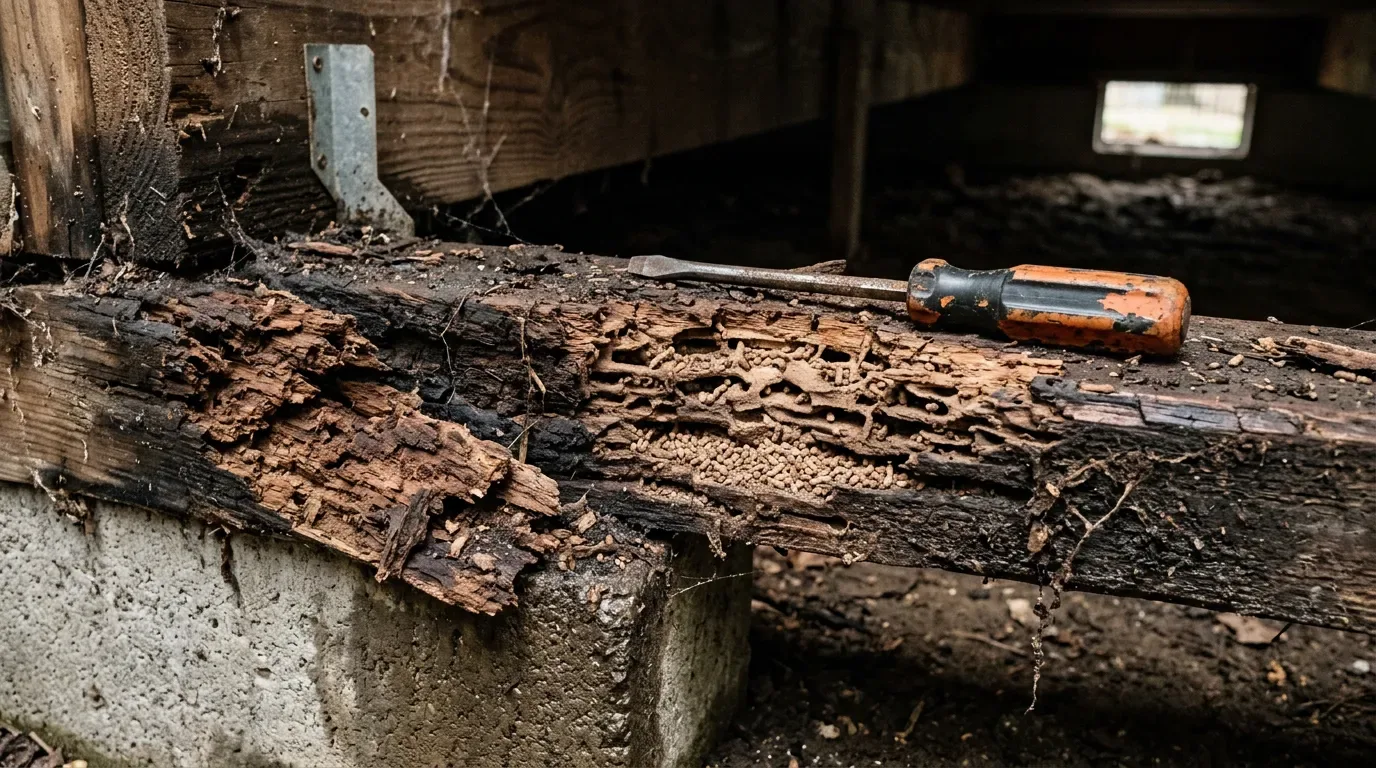
Wood in a house gets damaged in two very different ways. Fungi break it down when it stays wet, and insects eat it from the inside. From a distance the result can look the same: weak, crumbly wood that gives under your hand. But the cause is different, and so is the fix. This is the practical side of the termites vs water damage question for homes in Alpine.
Can water damage cause termites? Water does not create insects. But damp, rotting wood is easier for wood-eating insects to live in, and moisture is the one thing every kind of rot needs. So the first job is always the same - find out where the water comes from.
Brown rot and white rot: how to tell the difference
Wood-destroying fungi differ by the type of decay. Between the two main kinds there is one, but very important, difference. With "brown" decay it is mostly the light-colored cellulose that is destroyed, and what is left is dark brown, flaky, powdery lignin. A typical example is a piece of wood that has broken up into brownish cubes. A small test helps to tell more exactly - rub a bit of the wood between your fingers, and you will be left with fine brownish dust. With white fungus it is the other way around. Here the lignin breaks down, and what remains is fibrous, light or even almost white cellulose. Such wood cannot be rubbed into dust, it stays fibrous.
A typical "brown" sign (along with the cubes) is the dark brown color of the wood in the affected area. As said above, this is the result of the cellulose breaking down. While drying, the wood also shrinks along the grain, and that is what produces the cubes: large ones first, then small ones. At an early stage it is rather hard to tell which fungus is at work - wood that is barely infected only loses its strength over time, turning into punk.
Brown rot cannot always be spotted at first glance. It happens that a fungus settles inside a support beam and destroys it from within, while from the outside the wood keeps a good, healthy look.
The end result of white rot is whitish-gray, soft and loose wood. Unlike brown decay, the infected wood does not fall apart into small pieces, because the fibers do not let cube-shaped cracks form.
As a rule, in houses the chance of finding white rot is much lower than brown rot. Outdoors it is found just as often. Mistakes in naming the type are common. The reason is double infection - when both types of rot sit side by side on the same piece of wood.
Dry rot vs wet rot
One of the main threats to lumber is rot, and it can be wet or dry. In California, "dry rot" usually means wood that rotted while it was wet and then dried out: brown, crumbly and cracked into cubes. The fungus always needed water to start. One fungus found in California homes can pipe water through thick root-like strands from a damp spot into nearby dry wood, so a leak in a crawl space can rot wood some distance away. Wet rot cannot spread that way.
Wet rot is limited by its source of moisture. This means it cannot spread if there is no direct contact with water. Dry rot becomes a problem when it spreads in hidden parts of the house, such as stairs, attics or floors. It can appear in any part of a house where there is wood, if the conditions suit it.
Main signs of dry rot
Dry rot shows itself in a few ways:
- Affected wood. The affected wood itself is a good indicator. It looks dried out. This wood is most likely brittle and warped. Its grain may show cube-like cracks.
- Smell. The most common sign, even when no growth is visible, is a damp, musty fungal smell. It does not necessarily mean dry rot. But it surely points to a moisture problem, and moisture often leads to dry rot.
How dry rot starts
Dry rot spores are always in the air. They are mostly harmless unless certain conditions are there. For an infection to start, it takes high humidity and no ventilation. Dry rot begins to grow when the spores land on wood with a moisture content above 20%. Then they sprout and form gray hyphae (thin fungal threads). After that the mycelium grows, its color ranging from gray to pure white.
Once the threads form, they merge into a mass that grows in and on damp wood. Dry rot is hard to detect early: the first visible sign is often wood that has already gone soft or cracked into cubes.
What it leads to
First of all, dry rot can break the structural integrity of a building. That means not only costs, but a risk to the safety of the people inside. A house with dry rot is full of damp air and an earthy smell, which can make it harder to sell. The spores themselves are not dangerous. But the damp conditions the fungus needs can be bad for the health of older people, small children and people with respiratory illness. Damp wood is also where mold settles - more on that on the mold remediation services page.
Signs of insects in the wood
The other cause of crumbling wood is insects. In Southern California homes the usual suspect is termites; wood-boring beetles also exist, but the signs below are for termites.
Termites in Southern California
Here the insect most often blamed is the termite. According to UC IPM's guide to drywood termites, the western drywood termite is common along the Pacific coast and into the deserts of Southern California. Drywood termites live deep inside wood and are hard to detect until they swarm. Signs to look for are fecal pellets with six flat sides pushed out through small kickout holes, feeding damage inside the wood, and winged swarmers or their shed wings.
So how to tell the difference between water damage and termite damage? Rot comes with moisture, stains, a musty smell and wood that is soft, cracked into cubes or stringy. Insects leave holes, dust or pellets and tunnels, often in wood that looks sound outside.
Where to look
Since rot needs water, look where wood gets wet or stays damp:
- Bathrooms and laundry. The most common sources are leaking washing machines, shower pans, bathtubs and condensation.
- Roof edges and eaves. Moisture can come from outside - leaking roofs, and damp coming through the walls.
- Hidden wood. Stairs, attics and floors, where dry rot spreads unseen.
- Window frames, sills and baseboards. Where rain or condensation collects.
- Decks and outdoor wood. Some brown-rot fungi live mostly on the outside of a house, and white rot outdoors is found as often as brown.
Pigment spots on the surface of the wood may point to fungus. An unusual smell or rotting in wooden parts may point to a problem. Do not forget the visible changes either: cracks, the material falling apart, pores forming.
Stopping the moisture first
To get rid of dry rot, the source of moisture must be removed first. Whatever the source, the spread of rot can only be controlled after the wood has dried completely. If the wet wood came from a leak or a flood, that drying is the work described on the water damage restoration page, and the equipment is covered in our guide to dehumidifiers for structural drying. Wood soaked during firefighting needs the same care - see fire damage restoration services.
Rot in load-bearing wood can threaten the safety of the people inside. Do not stand on, load or lean on soft or crumbling framing, floors or deck boards until the wood has been checked.
Wood rot repair and treatment
You cannot always be sure the wood will stay dry for a long time. So it is important to take steps against reinfection. Wood rot treatment usually goes like this:
- Cut out the affected wood. Once infected timbers are found, a contractor cuts them back well beyond the areas with signs of fungal growth or threads; load-bearing wood is not a do-it-yourself job.
- Clean the surroundings. Remove all spores and fruiting bodies. Clean all parts of the walls to remove threads, mycelium and fruiting bodies. A stiff brush can be used on the walls.
- Replace. Replace the infected wood with pre-treated wood.
- Treat what stays. Treat the sound wood generously with a fungicide. These products kill the fungus and help keep it from coming back. Some preservatives suit dry rot best because they go much deeper into the wood than ordinary ones.
When removing affected areas, wear gloves and a mask to avoid harmful substances. After removal, treat the wood that stays with a wood preservative, such as a borate product.
If it is insects
For drywood termites, the options are treating the whole house, usually by tenting it for fumigation, or treating only the infested spots, depending on how widespread they are. Use uninfested wood for building. If the damage is already there, the wood is treated with chemical products - leave that work to a licensed pest control company so as not to poison yourself.
Wood with rot or insects is a problem in itself; the bigger one is how long it went unnoticed. To read about the people behind this site, see about our restoration team, read reviews from our customers, browse more articles on our blog, or go back to the home page of the site.